

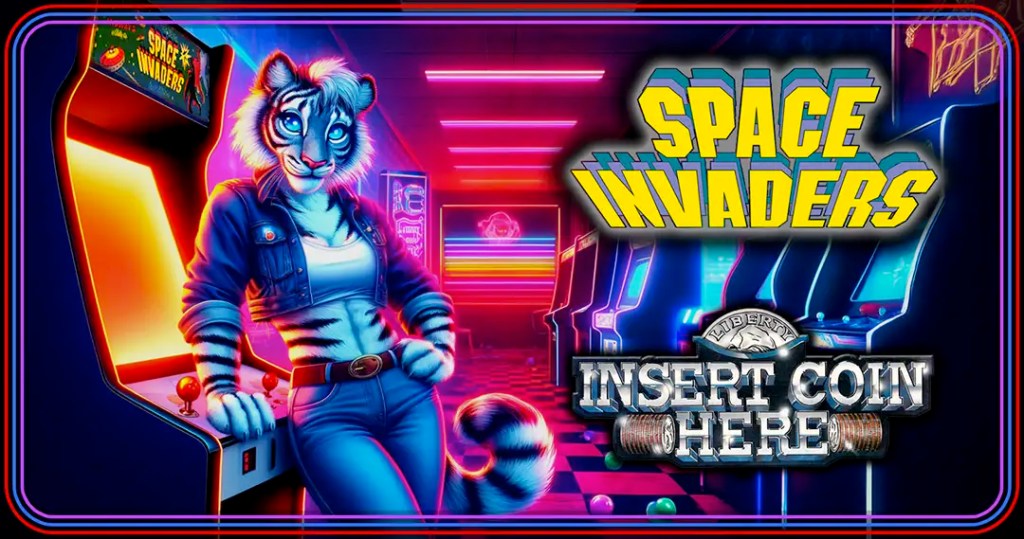
My first coin …
… and the rest is history.
My first coin …
The first arcade game I played was a clone of Pong in the spring of 1978. But my Golden Age of arcade games really started in 1980 when I played „Space Invaders“ for the first time in the lobby of a movie theater. And the rest is history …
A milestone of the arcade era
“Space Invaders” is considered one of the most influential video games in the digital entertainment industry and is widely regarded as the birth of the modern arcade era. Since its release in 1978 by the Japanese company Taito, it has marked a decisive turning point in the history of video games, as it showed for the first time how electronic games can reach a mass audience. It was one of the first games that was not only technically innovative, but also offered an addictive, easy-to-access gameplay that fascinated people worldwide. The game not only created a new standard for arcade entertainment, but also permanently changed the way we think about video games as a pastime. In no time, “Space Invaders” became a cultural phenomenon that was not only convincing in its aesthetics and game mechanics, but also in its economic success – it generated immense revenue and inspired the development of an entire industry. It established video games as a legitimate cultural medium with global appeal and played a decisive role in positioning the medium beyond its technical foundations as a form of expression for creativity, excitement and collective experience.
Gameplay

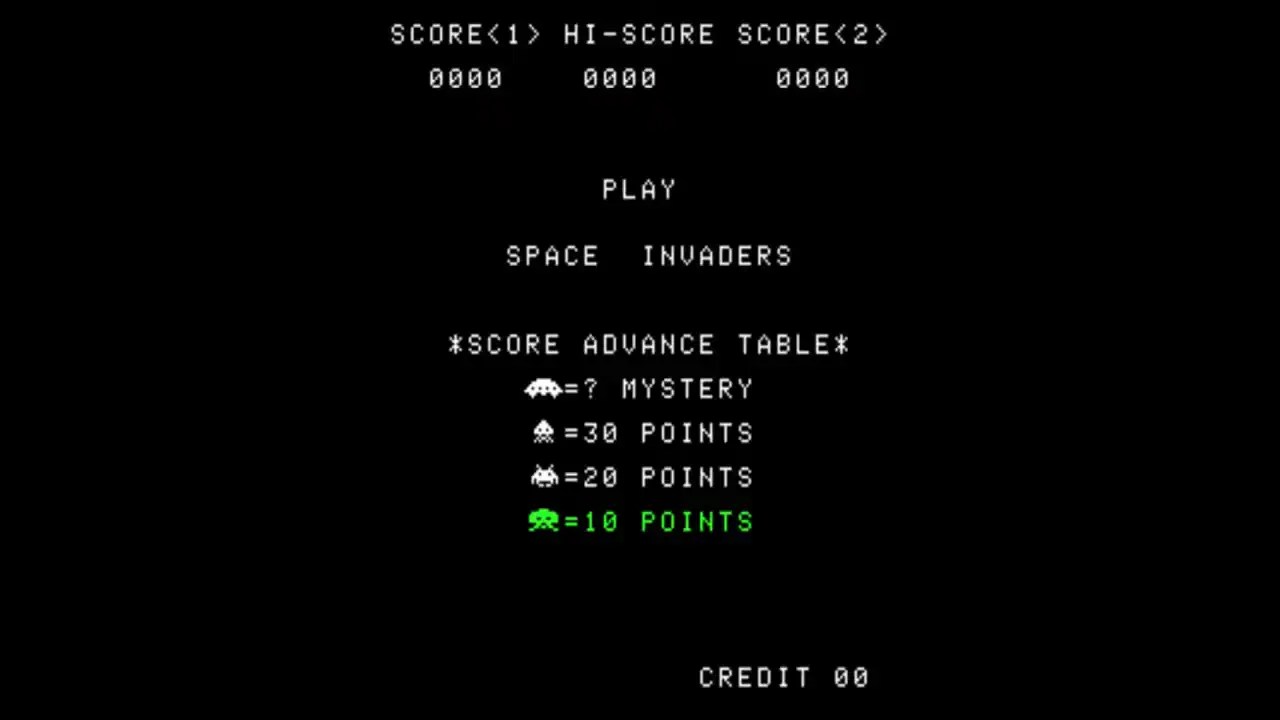
The basic game concept follows a simple but effective design principle: the player controls a turret at the bottom of the screen and must eliminate an advancing formation of alien enemies. The opponents move in a coordinated manner laterally and vertically across the screen, with their speed of movement increasing as the number of opponents decreases. This emergent gameplay phenomenon was an unintended but crucial aspect of the game that resulted from the limitations of the hardware. Shelters serve as temporary cover, but lose their protective function as the game progresses.


Technology
Technologically, “Space Invaders” is based on the Taito 8080 platform, which uses the Intel 8080 microprocessor, one of the most powerful CPUs available at the time for arcade machines. The central processing unit enabled simple but stable game mechanics with smooth movements of the enemy sprites. Although the graphics output was monochrome, the clever use of colored cellophane foils applied to the screen created a visually differentiated gaming experience. For example, the upper part of the screen appeared greenish and the lower part reddish, which reinforced the impression of different areas in the playing field and enabled a primitive form of color coding.
Another innovative aspect was the use of memory chips for programming and storing game data on the main board. The small amount of available RAM forced the developers to write extremely efficient code, which contributed significantly to the creation of the distinctive game mechanics. The representation of opponents in grid-based pixel graphics was not only a technical compromise, but also a defining stylistic element for an entire era of video game design.
The sound was minimalist but effective and contributed significantly to the immersive atmosphere of the game. The dynamic adaptation of the background noise to the game progress – for example, the faster “pulsation” of the sounds when there were fewer enemies remaining – created an increasing sense of tension and had a direct influence on the gaming experience. The audio design is therefore considered one of the earliest forms of dynamic, gameplay-related sound design and marked the beginning of a design principle that is now standard in the entire game audio industry.
History
“Space Invaders” was developed by Tomohiro Nishikado, who drew a great deal of inspiration from Western science fiction, particularly H.G. Wells‘ ‘War of the Worlds’ and George Lucas‘ ‘Star Wars’, when designing the game. These influences manifested themselves not only in the motif of the alien invasion, but also in the design of the enemy formations, which symbolize an oppressive, approaching threat. Nishikado was forced to develop both the software and hardware environments independently because there were no specialized development platforms for video games in Japan at the time. He even constructed his own tools for creating graphics and testing code, as corresponding tools were simply not available. The programming was done in Assembler, which, given the limited computing power of the hardware, required precise and highly efficient structuring of the code.
Particular challenges arose in the area of performance optimization. Nishikado had to develop innovative solutions to enable smooth animations and responsive gameplay despite limited processing power. For example, the characteristic acceleration of opponents was an unintended side effect of the reduced CPU load when fewer opponents were on the screen. The sound chip, which originally could only produce simple tones, was also used creatively to create a dense atmosphere by the standards of the time. The resulting technical compromises did not lead to a loss of quality, but became the basis for original and formative design decisions that made “Space Invaders” a seminal classic.
Trivia and anecdotes
- Due to the game’s enormous popularity, there was a temporary shortage of 100-yen coins in Japan because they were being thrown into the machines in huge numbers. According to reports, coin reserves were temporarily in short supply, prompting banks and shops to ration supplies or request additional stock. This circumstance not only illustrates the financial success of “Space Invaders”, but also the massive social influence that a single arcade game was able to exert within a very short period of time.
- The original plan was to depict human opponents, but this was rejected due to ethical concerns and replaced by fictional alien beings. This decision was groundbreaking for the further aesthetics of video games and contributed to the establishment of the science fiction theme in the medium. At the same time, it represented an early form of self-regulation for the industry and demonstrated sensitivity with regard to social norms and potential controversies.
- The increasing speed of the opponents was not the result of a conscious design decision, but a side effect of limited computing power: fewer active sprites resulted in higher processing speed. This random dynamic later became a defining feature of the game and is now a much-cited example of so-called emergent gameplay – a design principle in which unintended effects of game mechanics create new, meaningful gaming experiences. It underscores how technical restrictions can become a source of creative innovation.
Reception at the time of publication
Contemporary reactions to “Space Invaders” were overwhelmingly enthusiastic. The game was perceived as innovative, exciting and technically advanced. Players particularly praised the novel gameplay and the captivating dynamics created by the increasing speed of the aliens. In the late 1970s, it triggered a veritable boom in arcades worldwide. Numerous arcade operators reported a massive increase in visitor numbers, and the game quickly became one of the best-selling arcade titles of its time. In some regions of Japan, additional arcade machines even had to be installed due to the high demand. In the United States, too, “Space Invaders” became a synonym for the emerging medium of video games, laying the foundation for the industry’s commercial success.
Cultural influence
Beyond the immediate arcade context, “Space Invaders” had far-reaching cultural implications. It contributed significantly to the popularization of video games and influenced countless subsequent game mechanics and designs. The iconographic representation of the aliens developed into a symbol of early gaming culture and found its way into various pop-cultural areas such as music, fashion and visual arts. The aliens‘ design was taken up in numerous music videos of the 1980s, as well as on posters, T-shirts and graphic street art. At the same time, it inspired generations of developers to engage with video games not only as a pastime, but also as a medium of creative expression. The game is emblematic of the beginning of an era in which digital games were taken seriously as a form of cultural expression and found their way into cultural discourses and academic debates.
Modern perspectives and criticism
From today’s perspective, “Space Invaders” is primarily understood as a historically significant artifact of the early days of digital entertainment. It serves as an exemplary model for the possibilities offered by a reduced but functional game design. Although it appears simple and limited in direct comparison to today’s titles in terms of graphics, storytelling and game depth, it is precisely this reduction that enables an intensive examination of basic game mechanics. In the didactic analysis of game design processes, “Space Invaders” is regularly used to illustrate principles such as balance, progression and emergent gameplay.
In addition, the game is also an important source for research into cultural representations and fears: the depiction of an approaching threat from alien forces can, for example, be read as a mirror of contemporary geopolitical tensions. In a museum context, too, “Space Invaders” occupies a prominent role, for example in the context of exhibitions on media history. The cultural and aesthetic impact of the game is thus by no means limited to the gaming community, but extends far into other areas of society.
Summery
“Space Invaders” remains a prime example of how technical limitations can act as a creative impetus. It is impressive proof of how a maximum cultural effect can be achieved with minimal resources. As a historical milestone, it not only illustrates the beginning of a new medium, but also the relevance of design decisions in the context of technical restrictions. At the same time, it offers a valuable frame of reference for reflecting on the transformation of gaming expectations, aesthetics and production conditions within the games industry. In this respect, “Space Invaders” is not just a nostalgic symbol, but a living object of study in the teaching, research and design practice of digital game culture.








 McHenry's Lair
Kommentar verfassen :