


Commence attack on the Death Star’s main reactor!
The shield is down!
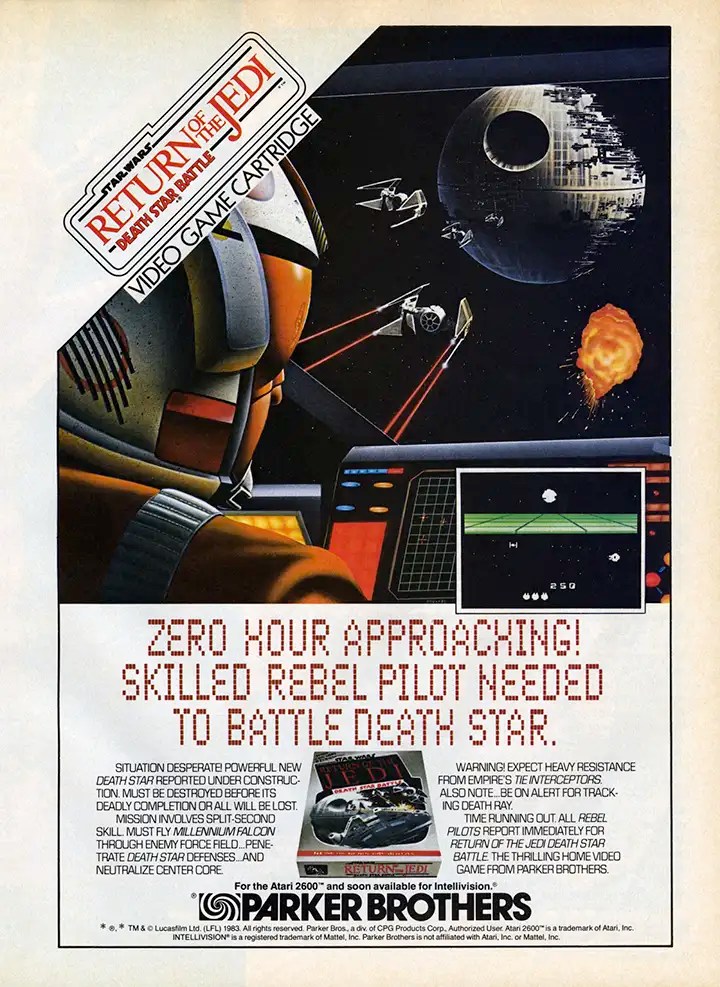
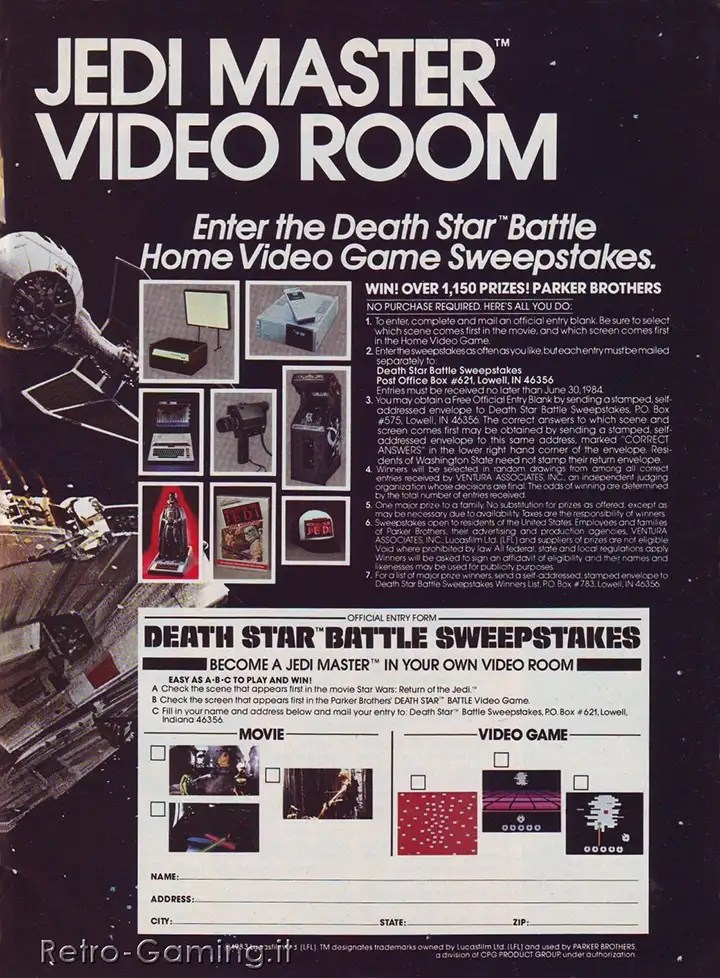
Released in 1983 by Parker Brothers, „Death Star Battle“ for the Atari 2600 is a space shooter based on the iconic Star Wars franchise, marking a significant entry into the world of early video game adaptations. As one of the few officially licensed Star Wars games of its time, it aimed to bring the cinematic action of the Death Star assault to home consoles, offering players a chance to experience the intense space battles from the beloved film series. The game was introduced during a period when video game adaptations of popular movies were relatively rare, making it an exciting and ambitious project that sought to merge the thrill of Star Wars with interactive entertainment. This title stood out not only for its direct connection to the blockbuster franchise but also for its effort to recreate the excitement of a galaxy far, far away on hardware that was fundamentally limited in terms of graphics and processing power. As a result, „Death Star Battle“ became a unique representation of early attempts to blend cinematic storytelling with video game action, reflecting both the creative ambition and technological constraints of its era.
Gameplay
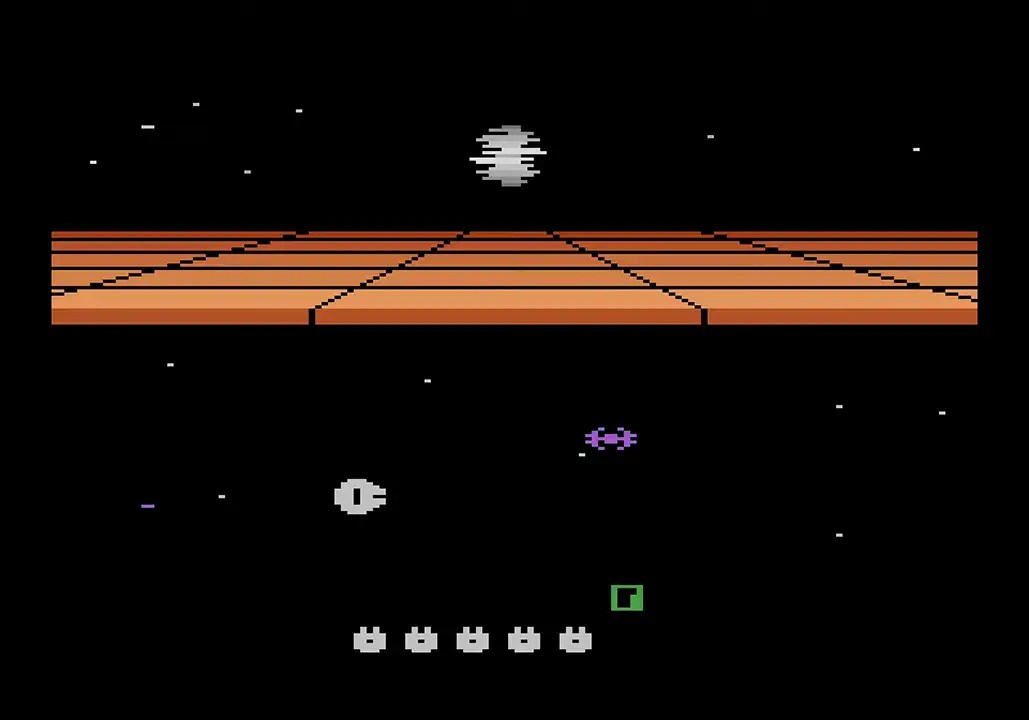
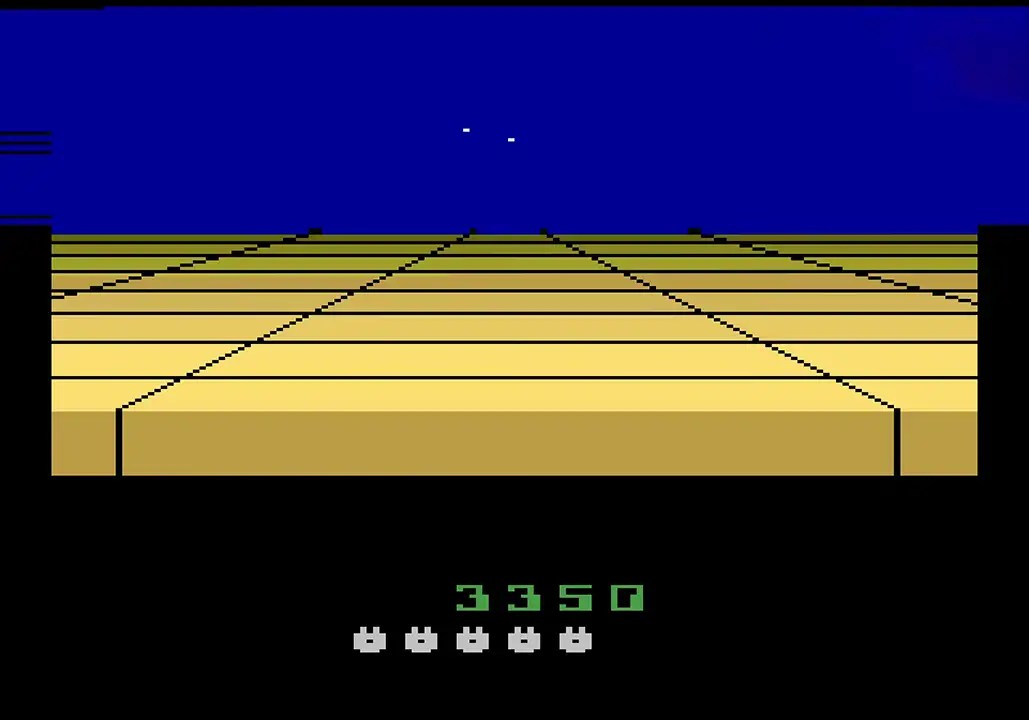
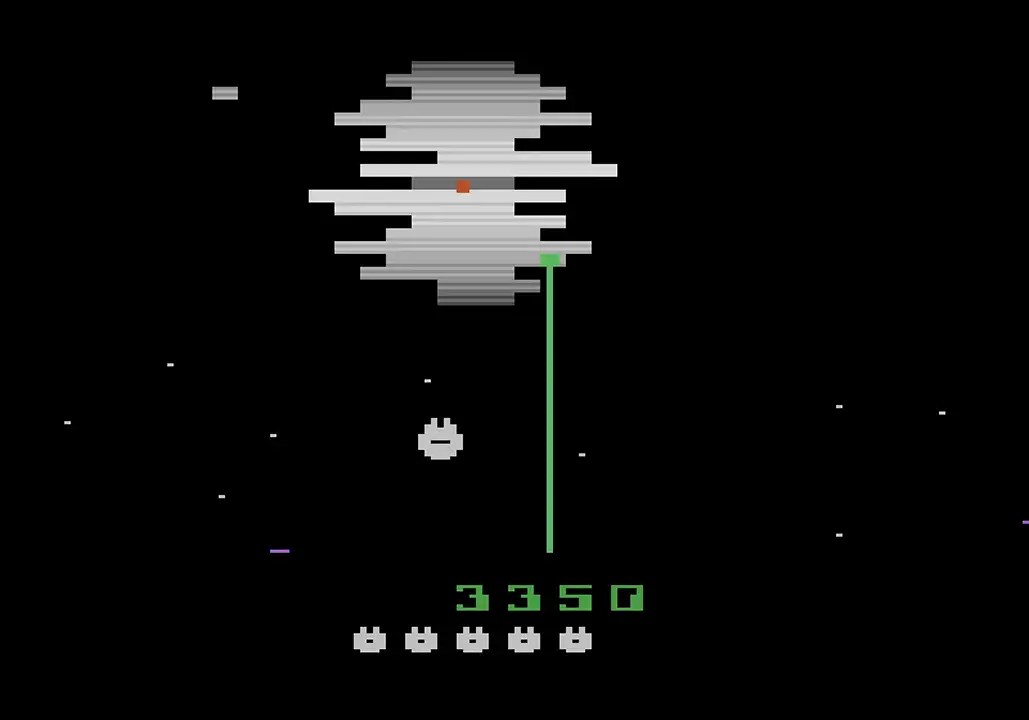
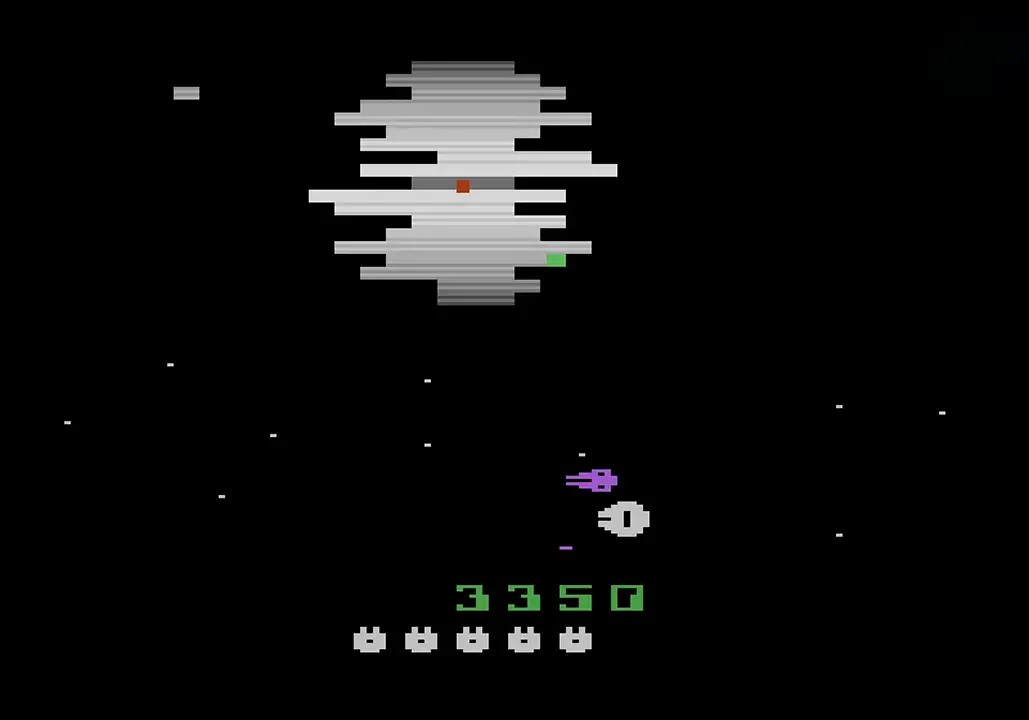
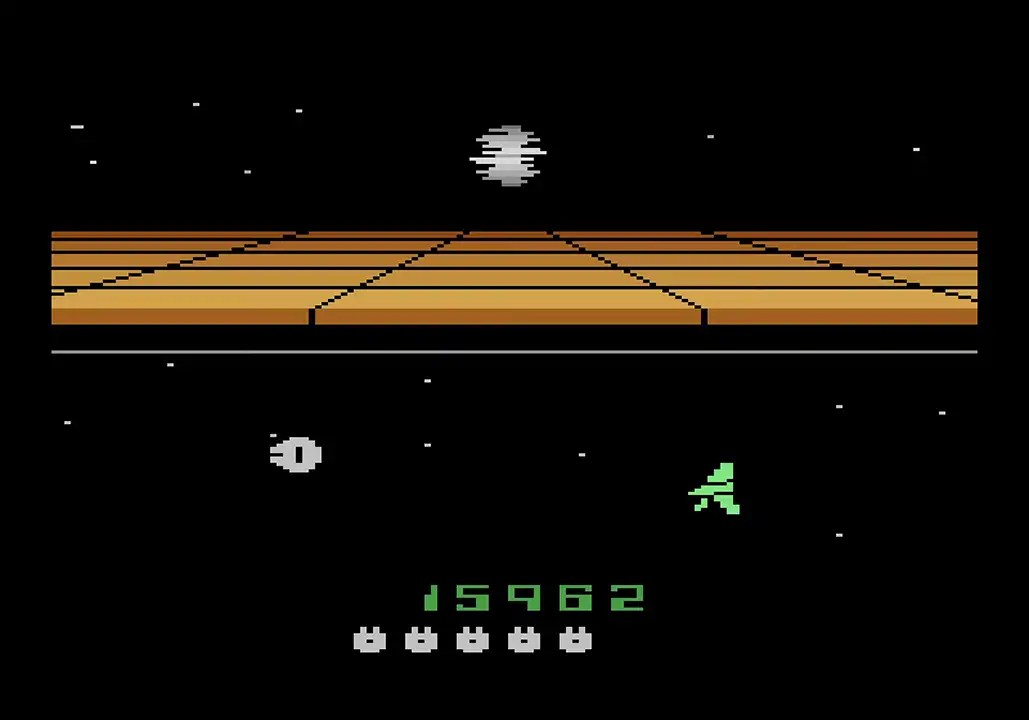
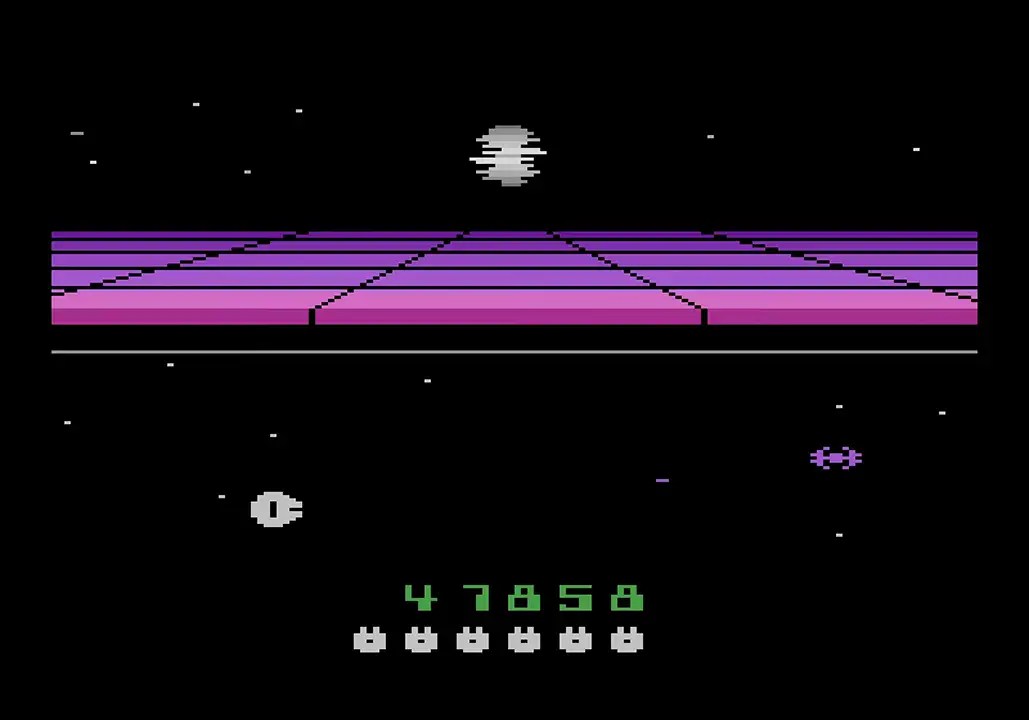
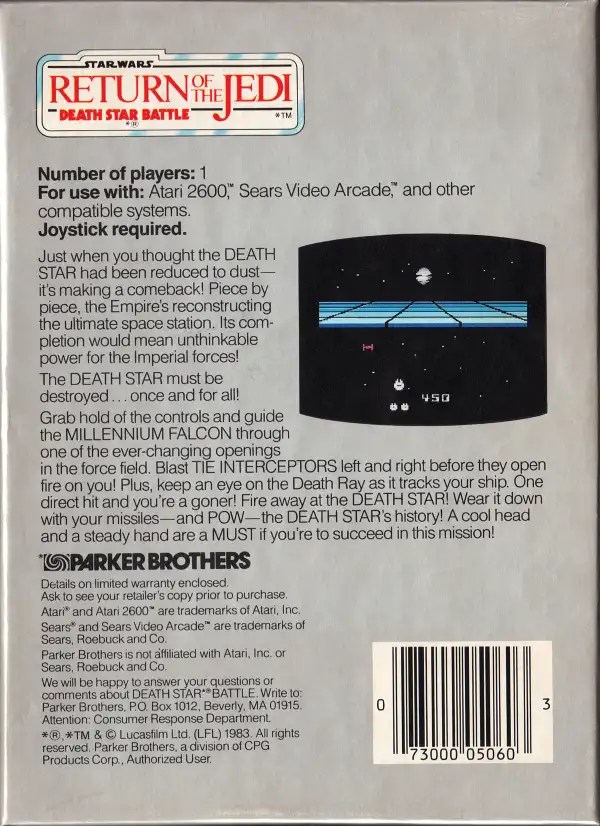
In „Death Star Battle,“ players take control of the iconic Millennium Falcon, piloting it through relentless waves of enemy TIE fighters in a high-stakes mission to destroy the massive Death Star. The game is divided into two distinct phases that progressively increase in difficulty. In the first phase, players must navigate through space while evading or strategically destroying enemy ships, requiring quick reflexes and careful maneuvering to avoid being overwhelmed. In the second phase, players must break through the Death Star’s formidable force field, which acts as a defensive barrier. This phase demands precise shooting and timing to breach the shield and gain access to the Death Star’s interior. Once inside, players are tasked with targeting the core reactor, the critical weak point that, when destroyed, will cause the Death Star to explode, marking the ultimate victory.
The gameplay, although simplistic by today’s standards, was highly engaging for its time, presenting a significant challenge that kept players invested. The fast-paced action and the need for strategic movement to survive the endless waves of enemies made the game both exhilarating and, at times, frustrating. Mastering the coordination required to navigate the chaotic space battles was a rewarding experience, creating a sense of accomplishment when finally achieving the iconic destruction of the Death Star.




Trivia
- „Death Star Battle“ was one of the few Star Wars games on the Atari 2600, sharing the lineup with titles like „The Empire Strikes Back.“ It showcased an early attempt to leverage a popular film franchise within the constraints of a home gaming console, a relatively novel concept at the time. As one of the few officially licensed Star Wars games on the platform, it drew significant attention from both gamers and fans of the franchise.
- The game was developed by Parker Brothers, more commonly known for board games than video games, marking one of their rare ventures into digital entertainment. The choice to work with Atari 2600 hardware posed challenges in terms of visual fidelity and gameplay fluidity, yet Parker Brothers made a commendable effort to deliver an engaging experience.
- Due to licensing issues and the relatively short production run, the game is relatively rare among collectors today. Its scarcity has made it a sought-after piece, especially for those who value the intersection of classic gaming and Star Wars memorabilia.
- The game’s visuals, while limited by the Atari 2600’s hardware, were considered impressive for their time, using creative graphical techniques to depict space battles and the Death Star itself. The combination of simple animation and recognizable iconography helped to convey the essence of the Star Wars universe despite the technical limitations.
Technology
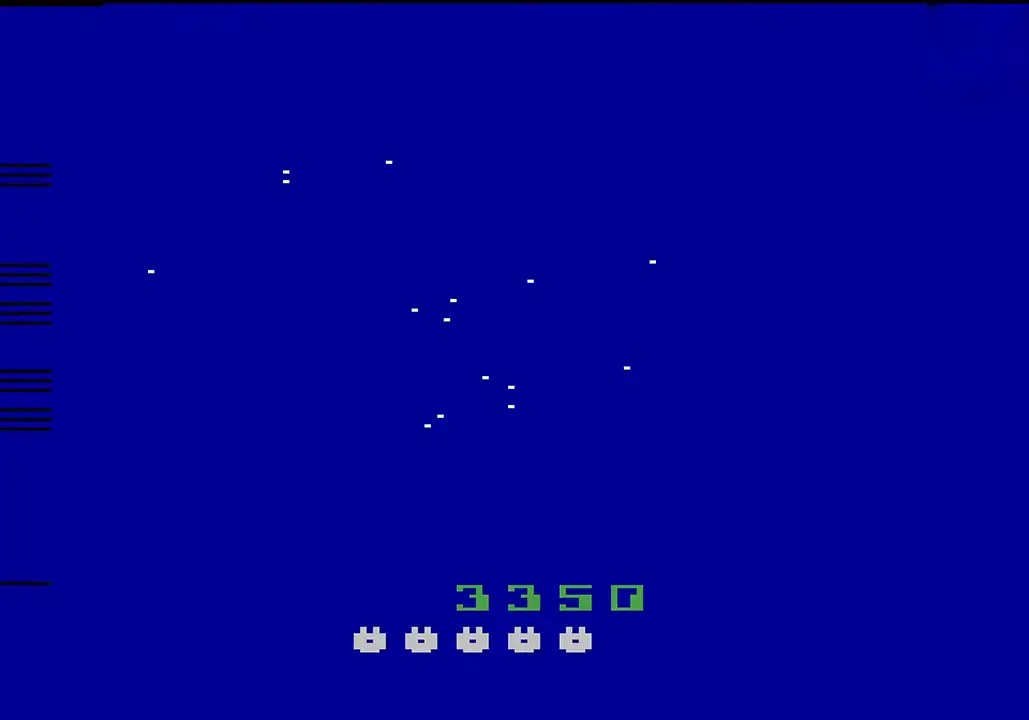
Like most Atari 2600 games, „Death Star Battle“ was built with highly limited hardware capabilities. The Atari 2600’s graphical power was rudimentary, with a limited color palette and low resolution, which made depicting complex scenes challenging. The game utilized simplistic graphics to depict the Millennium Falcon and TIE fighters, primarily using blocky shapes and basic animations. The Death Star itself was represented as a large geometric shape, and its destruction was visually signified by a series of flashing patterns. The sound effects were minimal, featuring beeps and blips to signify shots fired and enemy destruction, with no musical score due to the console’s limited audio channels. Despite these technical constraints, the game succeeded in creating a fast-paced, dynamic experience that conveyed a sense of urgency and action, capturing the essence of a space battle in a minimalist form. The use of simple yet effective visual cues allowed players to intuitively understand the game mechanics, making it accessible despite its challenging gameplay.
Reviews at the Time
Critics and players had mixed reactions to „Death Star Battle“ upon its release. While some praised the game for its connection to the Star Wars franchise and its ambitious gameplay, highlighting the excitement of taking on the Death Star in a home console setting, others criticized the repetitive action and lack of depth, feeling that the game failed to fully capture the expansive feel of the Star Wars universe. Some reviewers noted that the challenge level, while appealing to hardcore gamers, could be frustrating for casual players, especially given the game’s somewhat unresponsive controls during hectic moments. Still, many fans appreciated the challenge and the thrill of blowing up the Death Star, even in its simplistic form, seeing it as a unique chance to engage with a key cinematic moment through interactive means. Despite the polarizing opinions, the game garnered a dedicated fan base who valued its nostalgic connection to the Star Wars saga.
Cultural Influence and Reputation Today
Today, „Death Star Battle“ holds a niche but fond place in the memories of retro gaming enthusiasts and Star Wars collectors. Its legacy endures not only as a game but as a piece of cultural history from an era when video game adaptations were still novel and experimental. Many collectors and fans of vintage gaming hold the title in high regard, appreciating it for its historical context and its early attempt to bridge cinema and gaming. It is often seen as a product of its time, embodying the early days of movie-based video games, when the concept of translating iconic scenes from film to gameplay was still in its infancy. Despite its primitive graphics and repetitive gameplay, it remains an intriguing artifact of Star Wars’ early ventures into gaming, serving as a reminder of the franchise’s lasting impact across various media formats.
Summary
„Death Star Battle“ for the Atari 2600 is a testament to the early years of video game adaptation of blockbuster movies, reflecting a period when developers faced significant challenges in translating cinematic experiences to interactive formats. Despite its struggles with limited technology and mixed critical reception, the game has endured as a notable piece of gaming history. It exemplifies a transitional phase in the gaming industry, where creativity had to work within severe hardware constraints. Even though the gameplay and graphics are rudimentary by today’s standards, the essence of capturing the excitement of a major movie franchise made it a standout title. Over time, its nostalgic charm and connection to the Star Wars universe have cemented its place in the memories of retro gamers and collectors alike, representing a time when the line between cinematic experience and interactive play was just beginning to blur.
More
Advertisement


Box and Cartridge










 McHenry's Lair
Kommentar verfassen :